The Binance exchange interface is widely regarded as one of the most comprehensive and functional trading platforms in the cryptocurrency industry. When users first land on the Binance trading page, they are greeted by a data-rich dashboard that balances professional trading tools with user accessibility. Understanding its layout is essential for both new and experienced traders looking to optimize their workflow.
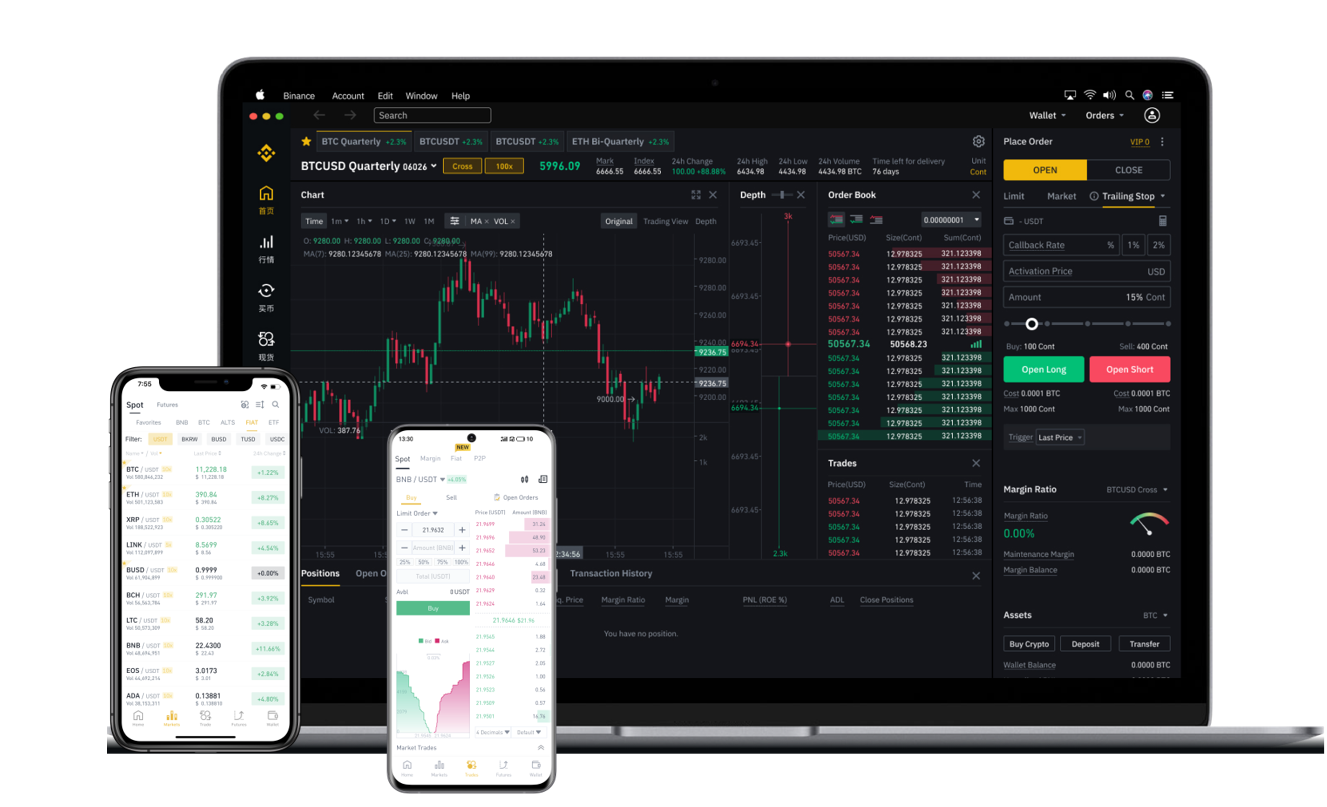
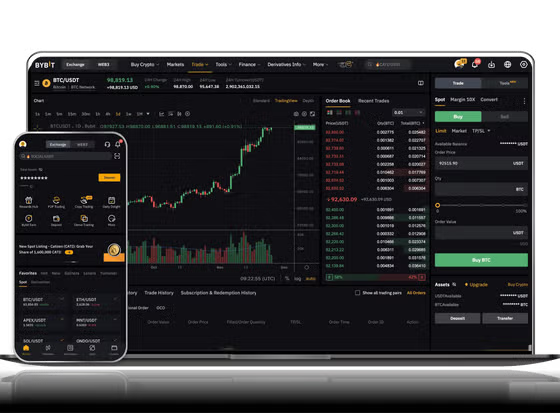
At the core of the Binance interface is the trading chart, which dominates the central portion of the screen. Powered by TradingView technology, this chart offers a wide range of indicators, drawing tools, and timeframes. Users can switch between candlestick, line, and depth chart views with a single click. The chart is highly customizable, allowing traders to overlay moving averages, RSI, MACD, and Bollinger Bands directly onto the price action. This makes the interface particularly appealing to technical analysts who rely on real-time data visualization.
To the left of the chart, users will find the order book. This live feed displays buy and sell orders at various price levels, providing transparency into market depth. The order book updates in milliseconds, giving traders a clear view of supply and demand dynamics. Below the order book, the recent trades panel lists completed transactions, including price, volume, and timestamp. This setup is standard for professional exchanges and helps users make informed decisions based on market momentum.
On the right side of the interface, the trading panel allows users to place orders. Binance supports several order types: limit, market, stop-limit, and OCO (one-cancels-the-other). For advanced users, the interface also provides a "Stop-Limit" and "Trailing Stop" option, which are essential for risk management. The panel is clearly segmented, with fields for price, amount, and total. Users can also toggle between "Buy" and "Sell" with a single button, reducing the chance of costly errors during fast-moving markets.
Below the chart, the asset management section displays the user's current balances for the trading pair. This includes available balance, in-order balance, and total balance. A quick "Transfer" button allows users to move funds between spot and futures wallets without leaving the page. This seamless integration is a major advantage for traders who manage multiple positions simultaneously.
For users who prefer simplicity, Binance offers a "Lite" mode. In this view, the interface is stripped down to essential elements: a simplified chart, a basic order form, and a list of top coins. This is particularly useful for beginners who may feel overwhelmed by the default "Advanced" view. Switching between Lite and Advanced modes is instantaneous, making the platform flexible for different skill levels.
Mobile users will find that the Binance app mirrors the desktop experience closely. The app features a responsive design, with the chart, order book, and trading panel all accessible from a single screen. Touch gestures allow users to zoom in on charts and quickly swipe between trading pairs. The mobile interface also includes biometric authentication for secure logins, which aligns with modern security expectations.
One area where the Binance interface stands out is its support for multiple trading pairs simultaneously. Users can open multiple browser tabs or use the "Multi-Chart Layout" feature to monitor up to four different pairs at once. This is a key advantage for arbitrage traders and those managing diversified portfolios. The interface also remembers user preferences, including chart settings and default order types, across sessions.
In terms of customization, Binance allows users to rearrange certain modules on the trading page. While the layout is not fully modular like some desktop trading platforms, it offers enough flexibility to hide panels that are not needed. For example, a user can collapse the order book or the recent trades panel to focus entirely on the chart. This helps reduce visual clutter without sacrificing functionality.
Overall, the Binance trading interface is designed for speed, precision, and data accessibility. It competes directly with institutional-grade platforms like Coinbase Pro and Kraken, while still offering a gentle learning curve through its Lite mode. The layout is intuitive for experienced traders, yet provides enough guidance for newcomers. If you are evaluating a cryptocurrency exchange based on its interface, Binance delivers a robust, professional-grade experience that supports both novice and expert trading strategies.